Measure the occupied table
The tabletop is only part of the footprint. Mark the table and chairs on the floor, then pull a chair out as someone would when sitting down. Check the route to the kitchen and any doors or storage nearby. An eight-seater is useful only when people can still move around it.
Compare round and rectangular forms
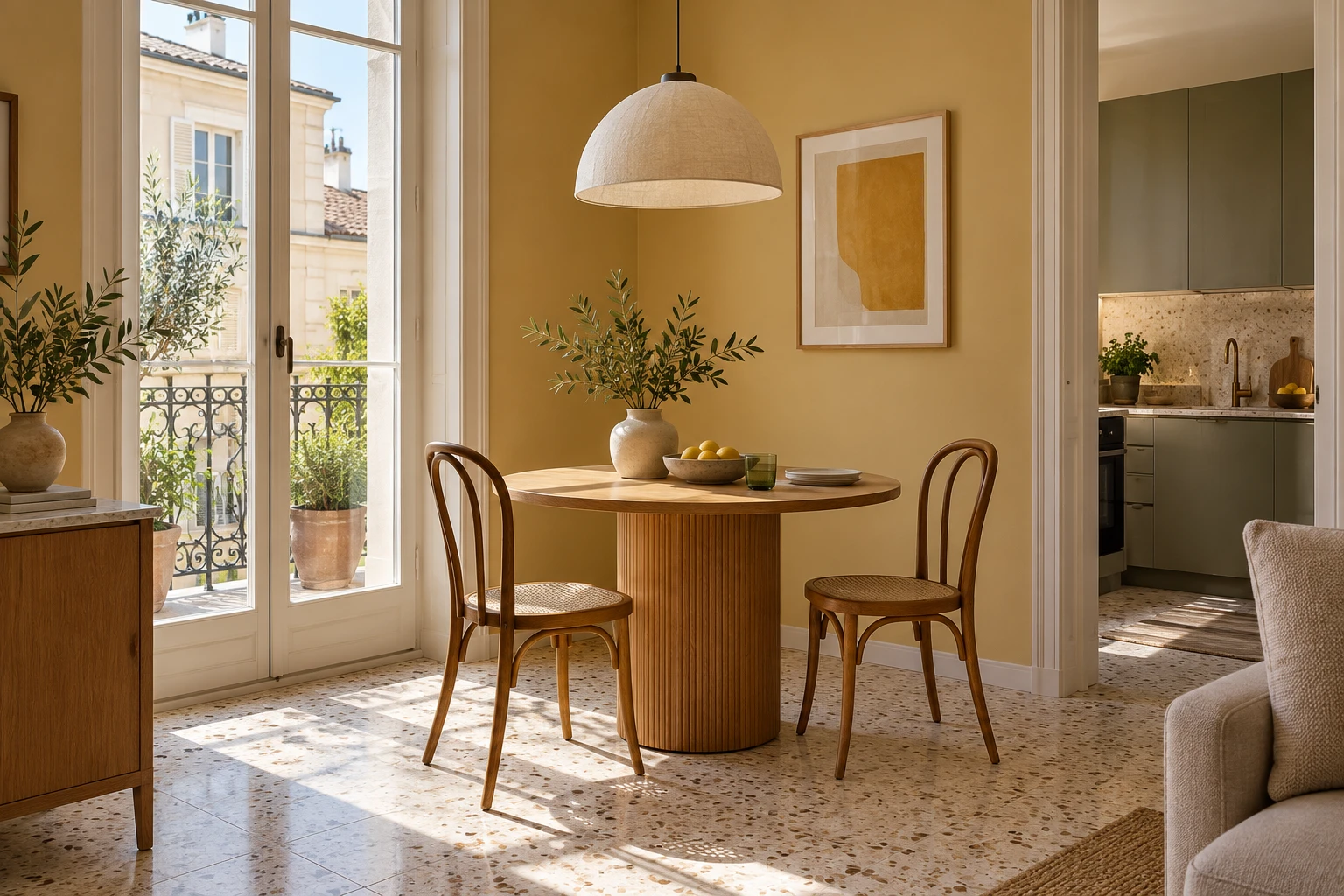
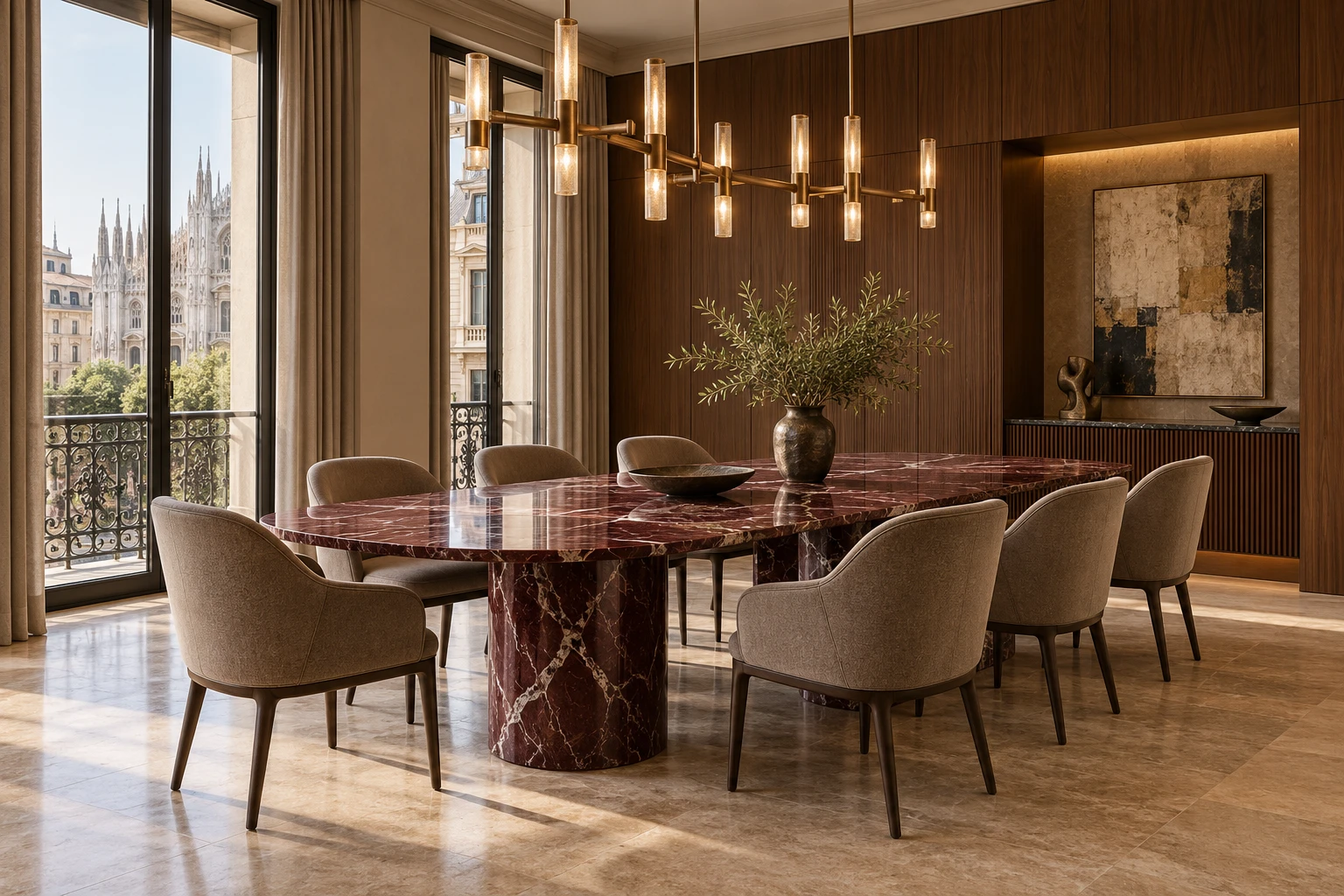
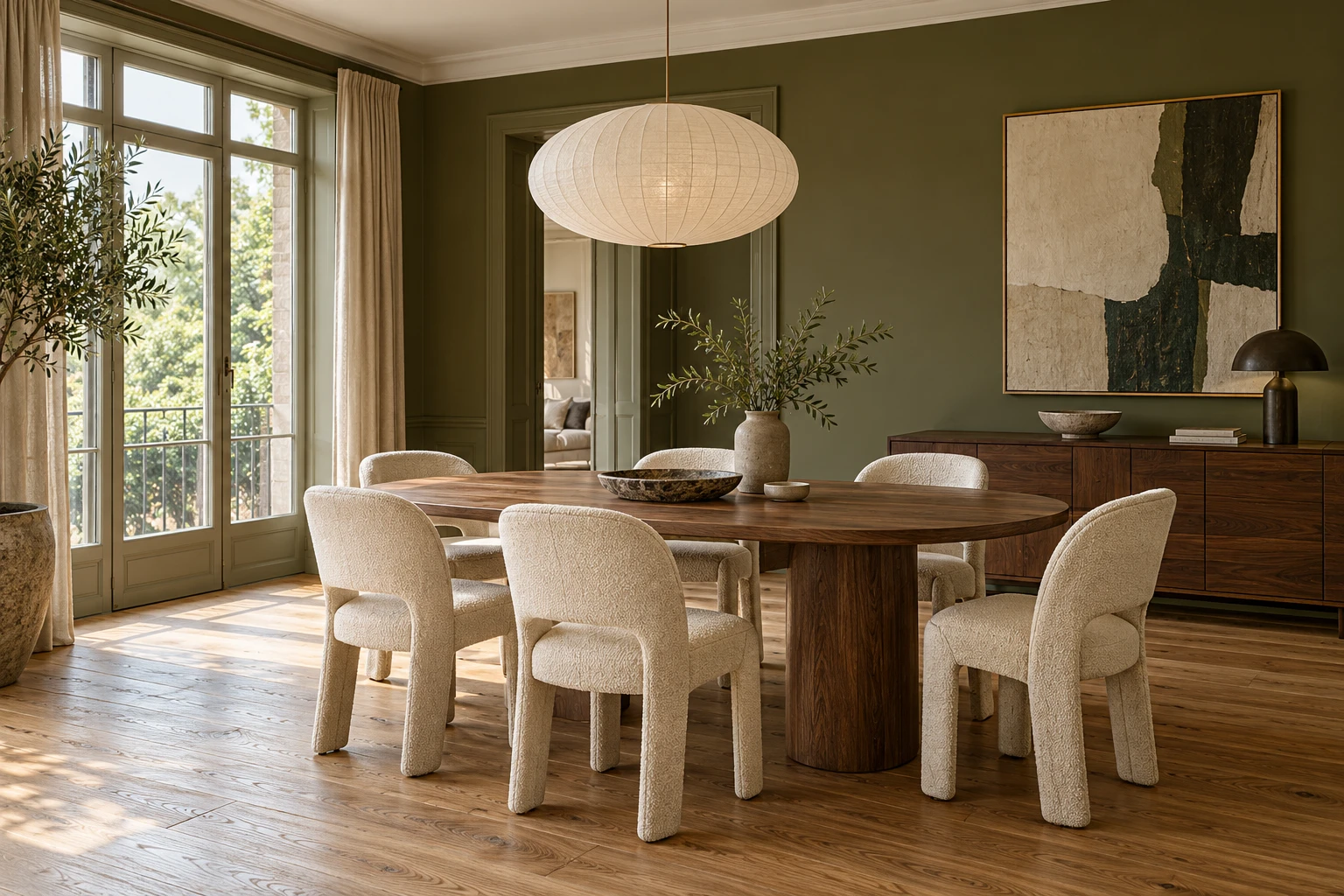
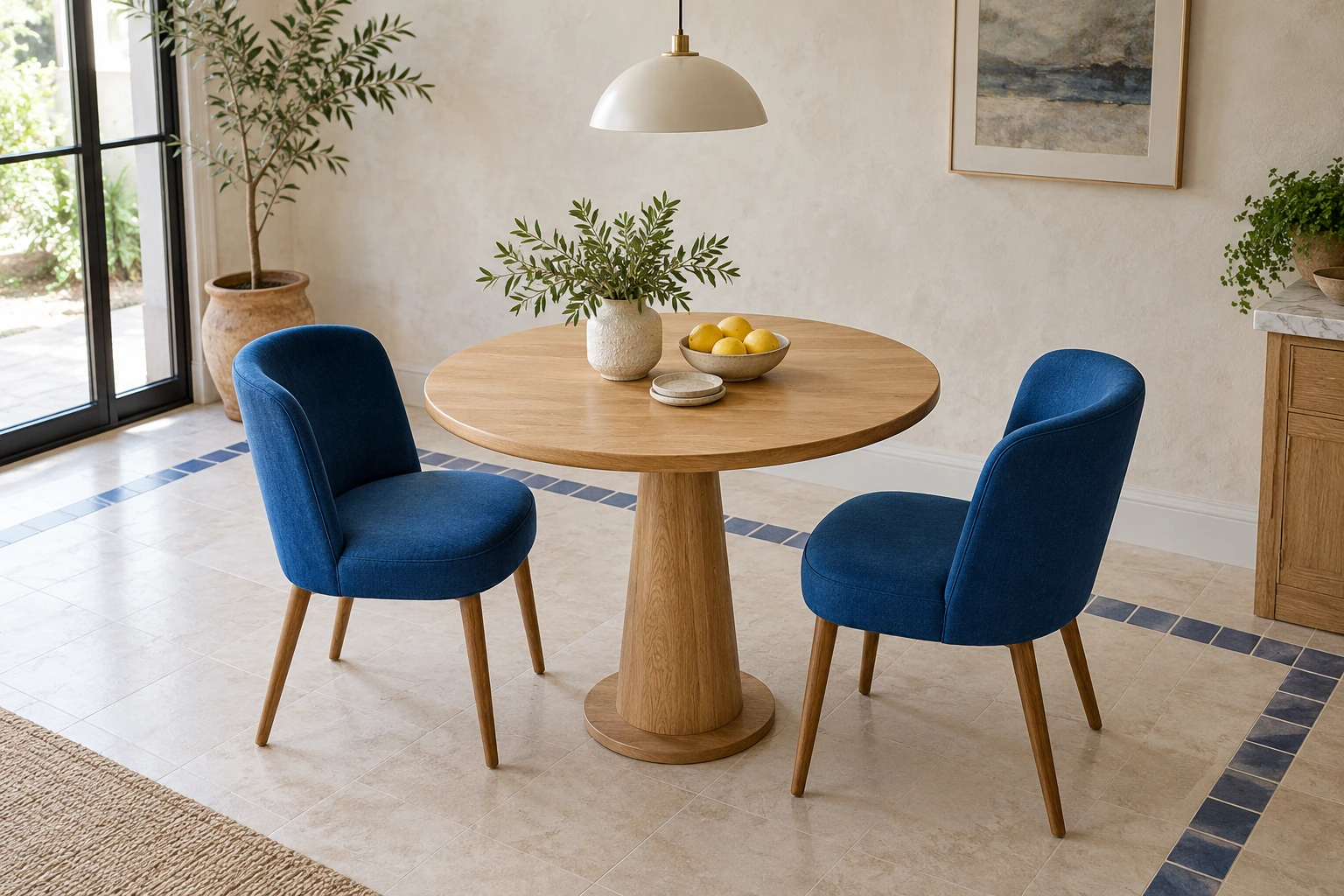
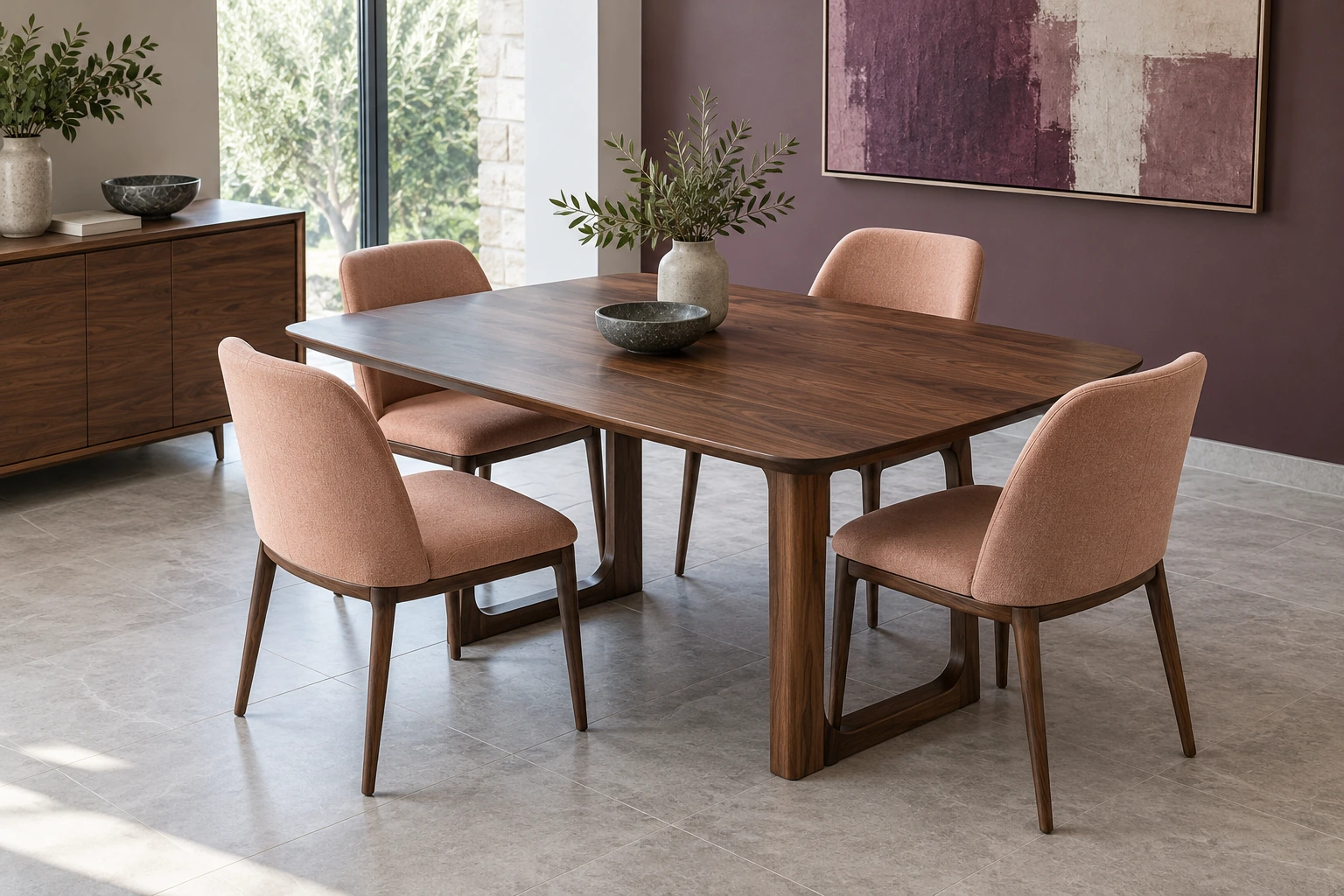
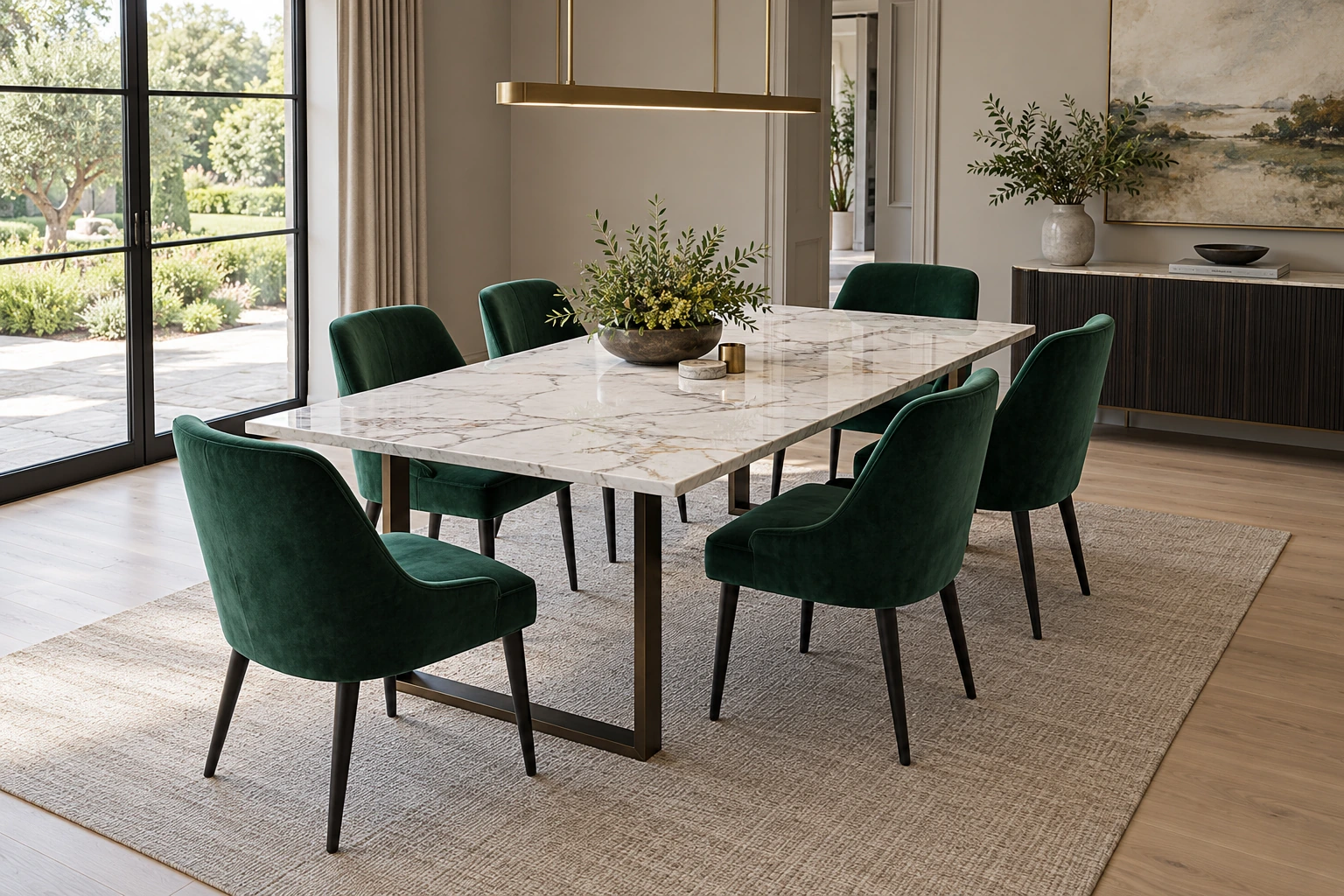
The two-seater round table in our collection creates a small breakfast setting. The round six-seater encourages a shared centre, while the rectangular six-seater suits a longer room. Neither shape automatically saves space in every plan. Look at the complete furniture group, including the base and chair backs.
Look underneath as well as on top
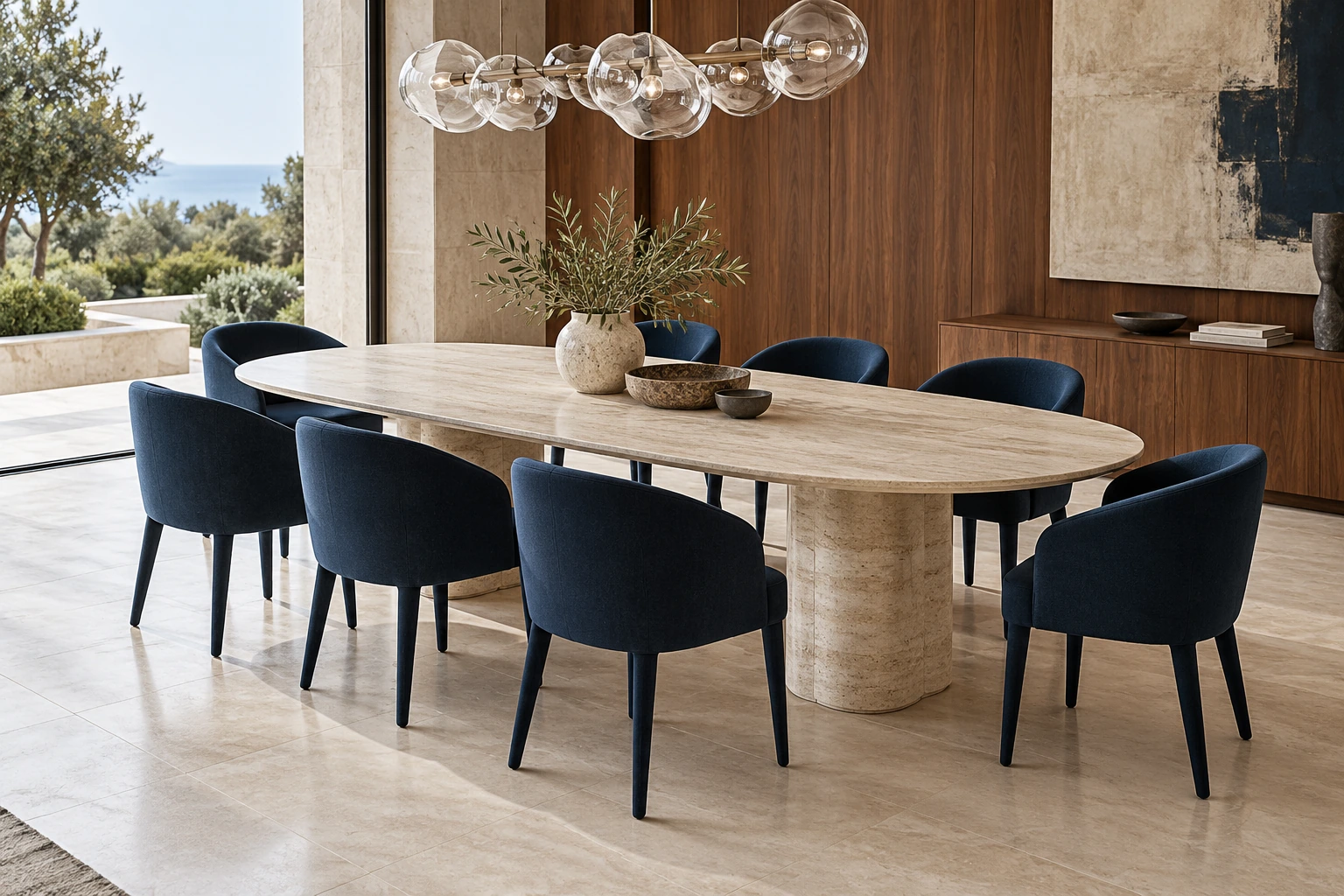
A central pedestal can free the corners, but its base still needs room for feet. Legs near the corners of a rectangular table can conflict with chair positions. Sit at a comparable piece or ask for dimensioned drawings before ordering a custom table. Upholstered arms also need to clear the underside if the chairs are to tuck in.
Choose a surface for your habits
Wood-look, marble-look and travertine-look tables create very different moods in the gallery. The image cannot verify the exact material or its stain resistance. Ask the supplier about the actual top, edge profile, sealing if relevant, cleaning and support. Families who use the table for meals, homework and work calls may value easy care more than a delicate finish.
Finish with light and colour
A pendant helps define an open-plan dining area when it is centred on the final table position. Ink-blue or emerald chairs make a strong accent; peach and mustard give a softer alternative. Use the gallery to choose the atmosphere, then ask VASTUTEK to check the furniture arrangement against your measured room.
Gallery images illustrate design directions. Final products, dimensions, performance and execution costs need to be confirmed for your project.
Plan your space with VASTUTEK ↗